
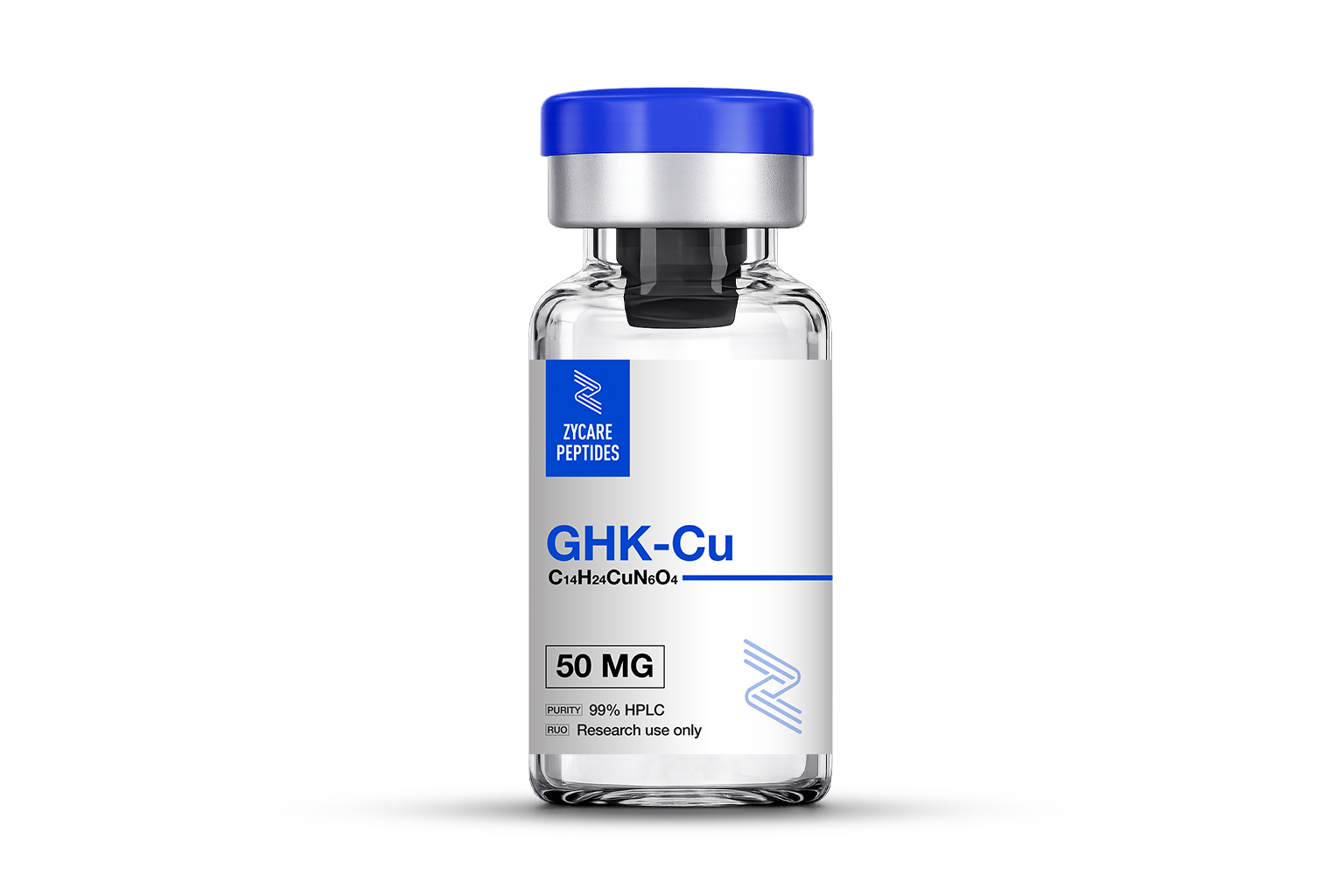
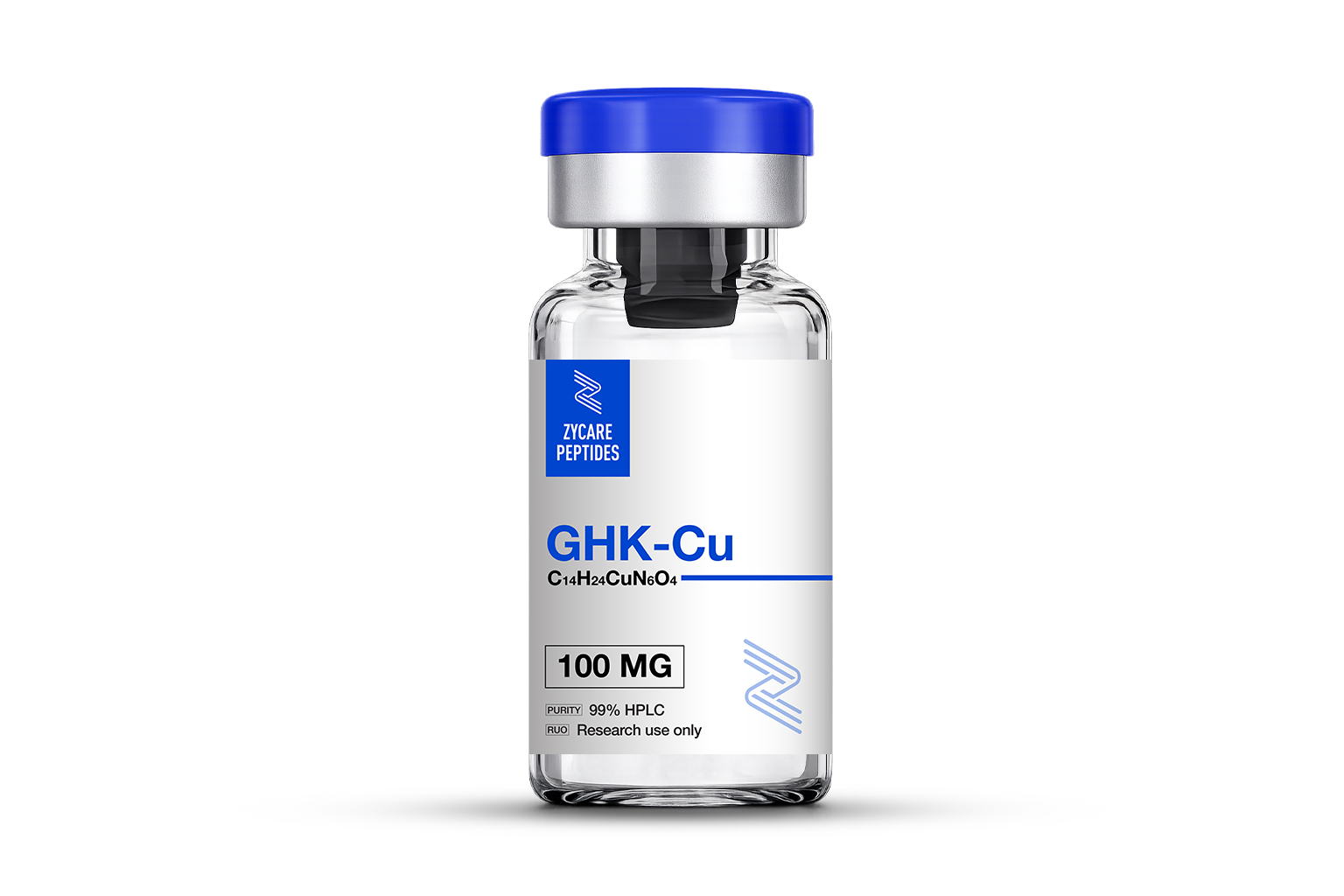


GHK-CU peptide injection is also known to be as Tissue repair peptide injection is a formulation of GHK-CU (Glycyl-L-Histidyl-Lysine Copper) that may act as a copper carrier and gene signaling peptide. It can be used in dealing with tissue repair, anti-inflammation, antioxidant defense and angiogenesis. GHK-CU refers to Glycyl-Histidyl -Lysine and Copper, which is a natural tripeptide-copper complex found in human plasma, saliva and urine.
Key Features
| About | |
| Drug Class | Dermal regenerative agent |
| Subclass | Tissue remodeling/ Wound healing peptide |
| Active ingredient | GHK-CU (Glycyl-L-Histidyl-Lysine Copper) |
| GHK-CU peptide injection | |
| Composition | Active ingredients
GHK-CU (Glycyl-L-Histidyl-Lysine Copper) Inactive ingredients: Acetic acid Mannitol Phosphate buffer |
| Packaging Type | Sterile glass vial |
| Pack Size | 1 vial |
| Dosage | 50 mg and 100 mg |
| Active ingredients | GHK-CU (Glycyl-L-Histidyl-Lysine Copper) |
| Shelf Life | Two years refrigerated for unopened vial. |
| Usages | Tissue repair, anti-inflammation, antioxidant defense and angiogenesis. |
How does GHK-CU Peptide injection work?
Gene expression, this may upregulate genes for collagen, elastin, glycosaminoglycans, and antioxidant enzymes like SOD1. Downregulates inflammatory cytokines IL-6, TNF-α.
- Tissue remodeling i.e., It may stimulate fibroblasts more collagen I, III, elastin. Increases decorin better collagen organization.
- Wound healing as it is Chemoattractant for immune cells and fibroblasts. Increases angiogenesis via VEGF/FGF-2.
- Antioxidant i.e., Cu²⁺ complex scavenges ROS. Induces superoxide dismutase.
- Copper delivery as it may Acts as a safe copper chaperone. Copper is a cofactor for lysyl oxidase collagen crosslinking.
- Anti-inflammatory as it suppresses NF-κB, reduces MMPs that break down skin matrix.
Research Application
GHK-CU Peptide injection can be used in
- Wound healing.
- Joint and tendon repair.
- Skin tightening.
- Reduce inflammation.
Research Dosage
- Starting dose can be 50 mg.
- It can be exceeded up to 100 mg.
- Do not exceed the dose by your own, consult a healthcare provider prior taking any such medications.
Strength
- GHK-Cu 50 mg
- GHK-cu 100 mg
Side effects and Interaction
Headache, redness, swelling, nausea, vomiting, tremor, fatigue and abdominal pain can be the possible side effects of GHK CU peptide injection. It may interact adversely with zinc supplements as high zinc may induce metallothionein. Long term copper excess can cause iron deficiency. NSAIDS steroids can blunt anti-inflammatory benefit. It may interact adversely with Penicillamine and Tetracyclines. It may interact with other copper containing products as it may increase risk of copper overload if combined.
Pharmacokinetics
- Absorption it is approx. 50-100% SubQ but GHK-CU may chelate and bind tissue.
- It may reach the peak plasma concentration 0.5-1 hour.
- Distribution: It may bind albumin and cell membranes. It may distribute to skin, liver, sites of inflammation/ injury.
- Metabolism: It is rapidly degraded by peptidases in pharma and tissue.
- Excretion: Peptide fragment via kidney.
Product Specification
| Specification | |
| Peptide class | Copper binding peptide |
| Molecular structure | Glycyl-L-Histidyl-Lysine Copper |
| Purity (HPLC) | ≥ 98% |
| Appearance | Light blue to blue crystalline powder |
| Reconstitution | Use sterile water or bacteriostatic water |
| Solubility | Soluble in water greater than or equal to 50 mg/ml. Copper keeps it soluble. |
| Storage (lyophilized) | −20°C, protected from light and moisture |
| Storage (reconstituted) | 2–8°C, use within 28 days |
Precautions
- The one with prior medical condition of Wilson’s disease or copper metabolism disorder.
- In the condition of liver disease/ cirrhosis, kidney disease, active cancer or cancer history should avoid taking such medications.
- Pregnant and breast-feeding lady should avoid such medications.
- In the condition of hemochromatosis avoid using such meds.
Conclusion
GHK-CU peptide injection is also known to be as Tissue repair peptide injection is a formulation of GHK-CU (Glycyl-L-Histidyl-Lysine Copper) that may act as a copper carrier and gene signaling peptide. It can be used in dealing with tissue repair, anti-inflammation, antioxidant defense and angiogenesis. GHK-CU refers to Glycyl-Histidyl -Lysine and Copper, which is a natural tripeptide-copper complex found in human plasma, saliva and urine. It may show some side effects like nausea, vomiting, tremor, fatigue, abdominal pain, headache, redness and swelling. Glow GHK-CU peptide injection is only for Research purpose it is not for human consumption, veterinary use or therapeutic application or any diagnostic purpose.
Related Research Peptides
You may also explore Tirzepatide, Semax 10 mg, NAD+, and MOTS-C peptides available at Zycare Peptides.
FAQs
Is GHK-CU peptide injection is used for Tissue repair?
Yes, GHK-CU peptide injection can be used in dealing with tissue repair, anti-inflammation, antioxidant defense and angiogenesis.
How does GHK-CU peptide injection may work?
GHK-CU peptide injection works by bind to Cu2+ tightly, transports it into cells. Copper is a cofactor for lysyl oxidase, superoxide dismutase, cytochrome c oxidase. This may support collagen and elastin crosslinking, antioxidant defense and mitochondrial energy
What can be the possible side effects of GHK-CU peptide injection?
The possible side effects of GHK-CU peptide injections are nausea, vomiting, tremor, fatigue, abdominal pain, headache, redness and swelling.
Who should avoid taking GHK-CU peptide injection?
The one with prior medical condition of Wilson’s disease or copper metabolism disorder, liver disease/ cirrhosis, kidney disease, active cancer or cancer history and pregnant and breast-feeding women should avoid taking such medications.
Does GHK-CU peptide need to be refrigerated?
Yes, GHK-CU peptide can be refrigerated at 2-8 °C, or -20°C, long term.
| Note: GHK-CU peptide injection is only for Research purpose it is not for human consumption, veterinary use or therapeutic application or any diagnostic purpose. |






Corey A. –
Excellent packaging and product presentation. I’ve had a smooth experience and am very satisfied overall.
D. Williamson –
GHK-Cu has been one of my favorite additions to my wellness routine. The quality is outstanding and easy to trust.